
Ultrasonic antifouling for government and defense vessels
Ultrasonic antifouling for hulls, running gear and seawater systems on government vessels of every size, from patrol boats and unmanned craft to cutters, research ships and offshore support vessels. We help government operators and vessel builders specify a system around the vessel, its operating profile and its procurement requirements.
Fitted on US Coast Guard cutter, aboard US Navy vessels, on Royal Thai Navy fast attack craft and on autonomous surface drones deployed for months at a time.
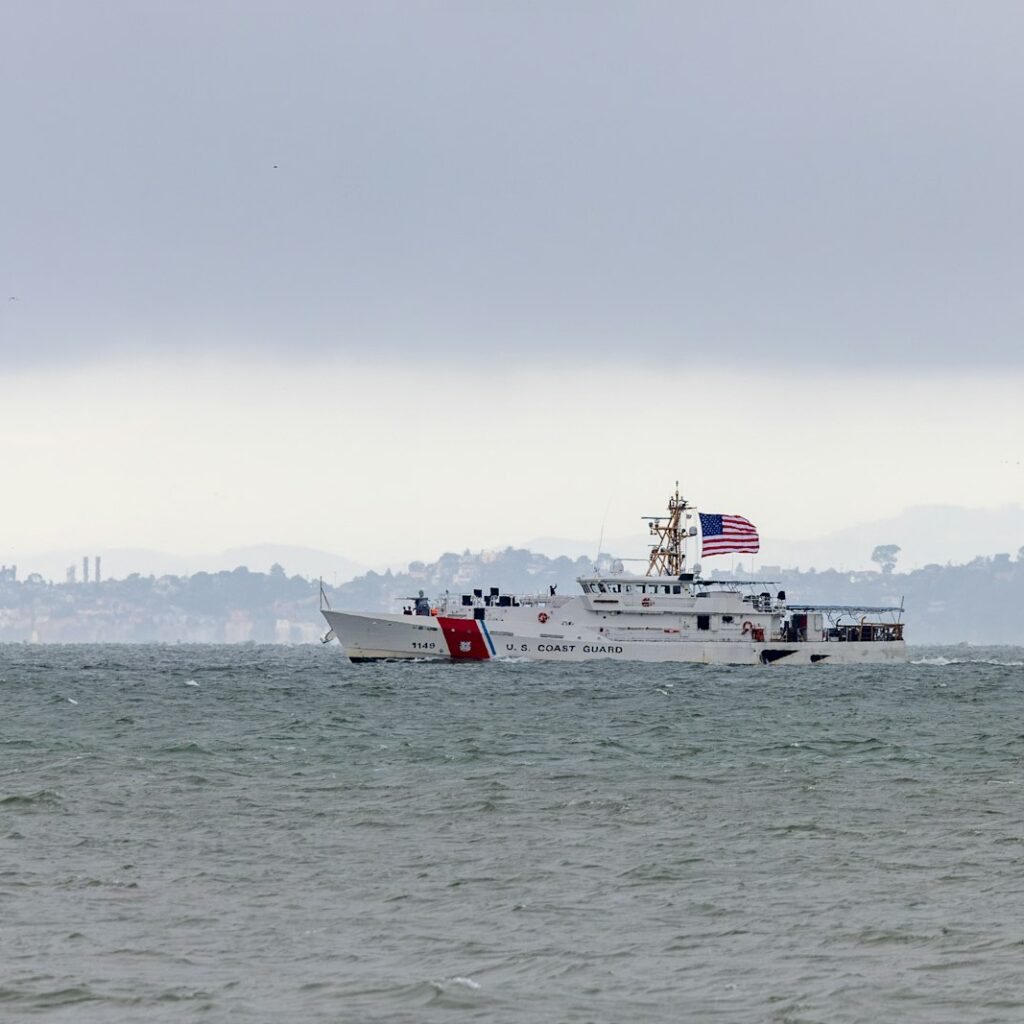
Government and unmanned vessel applications
U.S. Navy vessels
Hull Shield ultrasonic antifouling systems are installed aboard U.S. Navy vessels.
Royal Thai Navy
TOR 994 class fast attack craft, with a full antifouling design delivered through in-country contractors, and now fitted across a number of their smaller patrol boats.
Autonomous surface drones
Product testing has been followed by repeat orders for Hull Shield systems on autonomous surface drones that stay at sea for months at a time.
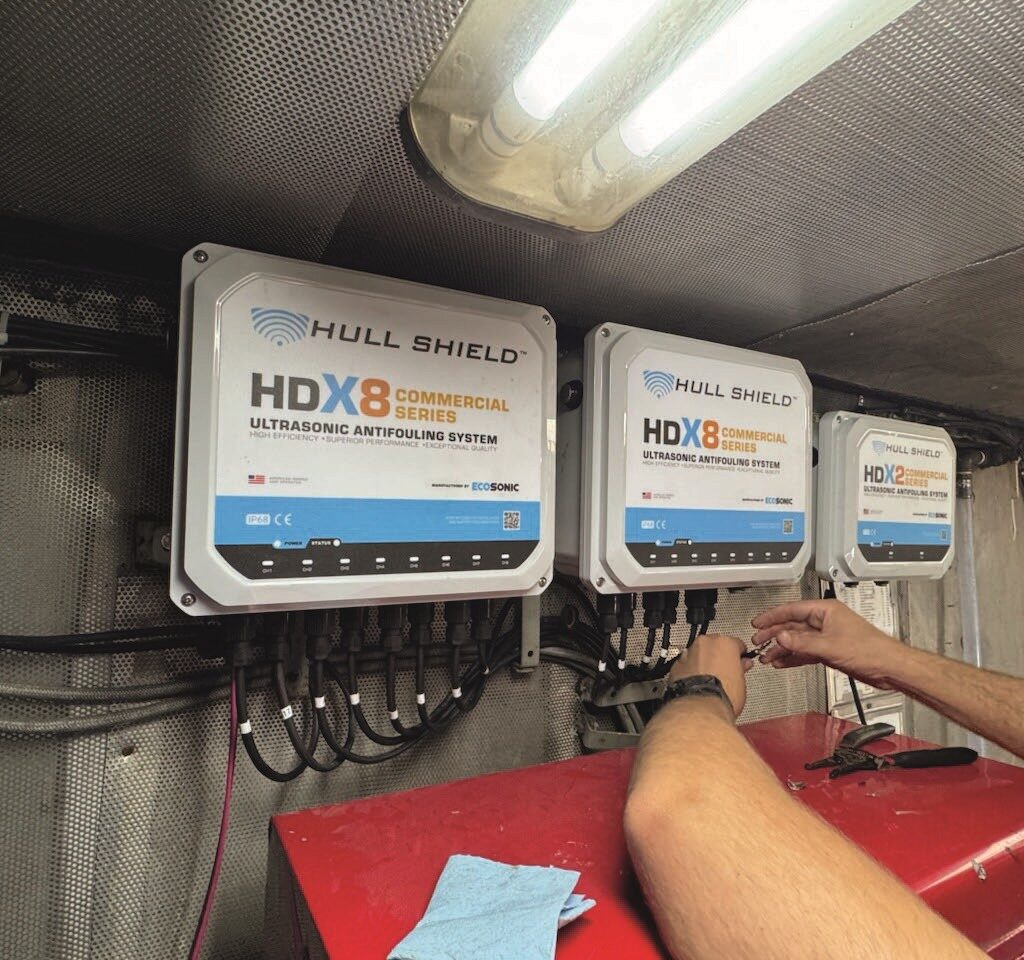
U.S. Coast Guard Cutter
Three HDX controllers, two HDX-8 and one HDX-2, installed in the engine room of a U.S. Coast Guard cutter. Transducers are bonded to the inside of the hull and to critical raw water system components to help control fouling and support reliable operation.
Each new installation is reviewed for hull construction, mounting access and the equipment to be protected.
Government operators and vessel builders
Federal and defense programs
Navy, Coast Guard, Army watercraft and federal research fleets. Keeping hulls clean for the warfighter is the job. Contact Hull Shield’s Federal Sales team for system selection, quotation and program support.
State and local
Police and natural resources patrol boats, fire and rescue, municipal fleets and port authorities. Contact Hull Shield for vessel assessment, quotes and purchase coordination.
Primes and OEMs
Shipyards, prime contractors, integrators and unmanned vessel builders. Tell us the end agency or program so we can coordinate the appropriate sales route.
Allied and international projects
Contact Hull Shield with the country, end user and project scope. We will confirm available purchasing, installation and support arrangements.
Support your maintenance plan
Manage fouling between service intervals
Ultrasonic antifouling can help limit fouling buildup and the maintenance it creates. Use it alongside the coatings, inspections and cleaning practices appropriate to your vessel and operating waters.
Operate without biocide dosing
The ultrasonic system introduces no antifouling chemicals into the water. Transducers mounted to suitable structures deliver ultrasonic energy to the areas selected for protection.
Plan around available power
We review the proposed configuration against the vessel’s DC supply and operating schedule, then recommend the right system, or systems, for the project.
Review extended deployments
Unmanned vessels can spend months at sea with no practical access to divers or hull cleaning. Designed for continuous operation during extended deployments, Hull Shield helps manage fouling on the hull and critical components for the length of the mission, and we size the system to the charging capacity so it fits inside the vessel’s power budget.
Define the fleet configuration
A documented controller and transducer plan helps coordinate repeat installations and spare-parts support. Compatibility is confirmed for each vessel configuration.
Document procurement requirements
Tell us which sourcing, technical and documentation requirements apply to your purchase. We will review the proposed configuration and available supporting records during the quoting process.
Systems specified around the vessel
Vessel length is a starting point. Hull construction, isolated components and operating conditions determine the final transducer plan.
G identifies a government configuration within the HDi or HDX family. Your quotation defines its hardware, electrical requirements, control features and included items.
HDi-G
For patrol boats, response craft and other small-vessel applications. Selection considers hull and drive layout, available DC supply, mounting access and required control features.
Models: HDi-G1, HDi-G2, HDi-G3, HDi-G4, HDi-G6 and HDi-G8, by transducer count.
HDX-G
For larger vessels, workboats and selected seawater or fixed marine equipment. Selection considers multiple protection areas, equipment geometry, cable routes and electrical load.
Models: HDX-G2, HDX-G3, HDX-G4, HDX-G6, HDX-G8 and HDX-G10, by transducer count.
Documentation for your purchase
Request specifications and available installation, sourcing and manufacturing documentation for the proposed configuration. Tell us which solicitation requirements apply so we can identify the supporting records available for your purchase.
Include your intended purchasing method and any required contract vehicle. The quoting sales contact will confirm the selling entity, accepted payment methods, terms and ordering instructions.
Registration and compliance
- Legal name: EcoSonic, LLC d/b/a Hull Shield, 222 Severn Avenue, Suite 26, Annapolis, MD 21403-2544
- SAM.gov: active registration, all awards, through June 2027
- UEI: K6V2C4PJQYU5 · CAGE: 227N5
- NAICS: 335999 primary, 336611 secondary · PSC: 2090, Miscellaneous Ship and Marine Equipment
- Country of origin: United States
- Small business: U.S. small business under the SBA size standard for NAICS 335999. 100 percent American owned.
- Compliance: Contact Hull Shield for current country-of-origin and sourcing documentation for the proposed configuration and your solicitation requirements. ISO 9001 compliant.
Start with Hull Shield
Our team will help define your system requirements and coordinate quotation, purchasing and manufacturer technical support for your agency or program.
Whether you represent a federal or defense program, a state or local agency, a shipyard, a prime contractor or an OEM, start by telling Hull Shield about your vessel and procurement requirements.
Installation and technical review
Transducers bond to suitable accessible structures without creating a through-hull opening for the transducer. Some installations can be completed afloat. Hull condition, access, preparation and adhesive cure requirements determine the installation plan and any downtime.
For a technical review, provide the vessel type, dimensions, hull material, available power and areas of concern. Separate structures may require dedicated transducers; material and geometry affect the transducer plan.
If your program excludes wireless hardware or requires specific connectivity controls, include that requirement in your inquiry. Also identify any restrictions on installation, electronics or operation near other onboard equipment.
- HDX-G: 24 to 28 V DC input, maximum 32 V DC. Average draw 10 to 50 W by model, 120 W maximum sustained pulse power. IP68 enclosure, −30 to 60 °C operating range.
- HDi-G: true 12 V and 24 V configurations, 60 W maximum pulse power (standard configuration). Ships without Bluetooth or Wi-Fi.
- Based on the HDi and HDX designs, with components and manufacturing being updated to meet TAA and BAA requirements. Performance specifications match the HDi and HDX pages.
Request a government quote
Tell us what you operate and what you need to protect. We reply within one business day, and quote within a week once we have the vessel details: hull material, length, running gear and where the vessel normally deploys.
Government sales and technical support
Contact Hull Shield for federal, defense, state and local requirements.
Hull Shield · Annapolis, Maryland
Monday to Friday, Eastern time
Tell us about your requirement
Start with your contact information, organization and a brief description. Vessel and procurement details help us prepare the configuration review.
We use the information you submit to respond to your request and may share it with the sales partner assigned to your program. Please submit only information suitable for an ordinary website inquiry. Do not include classified, controlled or otherwise sensitive technical information.
Frequently asked questions
Use the Government Inquiry form to contact Hull Shield and select the type of agency or program. Our team will help define your system requirements and coordinate quotation, purchasing and manufacturer technical support. Your sales contact will confirm the quoting entity and ordering instructions.
Yes. Include the end customer or program, installation scope and required delivery date. We will confirm the appropriate sales route and information needed to prepare a quote.
Plan to retain the coatings, inspections and cleaning appropriate to your vessel. Ultrasonic antifouling is an additional tool for managing fouling. Results depend on the installation, protected surfaces, operating conditions and maintenance practices.
Start with the vessel and the surfaces you need to protect. We review hull material, dimensions, isolated components, mounting locations, cable routes and power availability before recommending a series and transducer plan.
Request the input-voltage range and average and maximum input load for the proposed configuration. Transducer pulse output is a separate specification and should not be used as the vessel electrical load. Battery and charging capacity must support the intended operating schedule.
It may be possible where suitable mounting surfaces are accessible and conditions permit proper preparation and bonding. The installation review will identify access, cure time and any work that needs a haulout or other maintenance window.
Send the applicable requirements with your inquiry. We will review the proposed configuration and available supporting documents before quotation. A government series designation alone does not establish compliance with a particular solicitation.
Hull Shield accepts purchase orders and government purchase cards for state and local purchases. For federal and defense programs, contact Hull Shield’s Federal Sales team to confirm purchasing arrangements and any required contract vehicle.
Provide the installed model, full part number and serial number, along with the vessel and a description of the request. Hull Shield can review technical compatibility and coordinate the appropriate support or sales contact.
Yes. Send the country, end user and project scope with your inquiry and we will confirm what we can supply, install and support there.